Integrating Rose Flowers As a Part of Letter Q into Professional Design Workflows
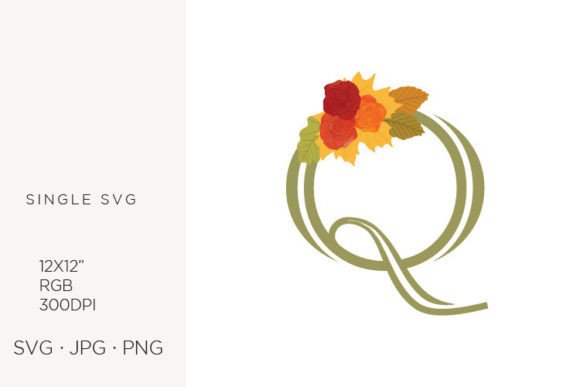
In the realm of digital design and creative crafting, the fusion of botanical elements with typography offers a unique avenue for expression. Specifically, incorporating Rose Flowers As a Part of Letter Q creates a distinctive visual identity that balances elegance with structural clarity. This specific design approach is not merely about decoration; it is a strategic choice for designers seeking to convey sophistication, romance, or organic growth within a typographic framework. Whether you are developing a brand identity for a boutique florist, creating personalized wedding stationery, or designing high-end web graphics, understanding the technical and aesthetic nuances of this asset is crucial for effective implementation.
The availability of such assets in versatile digital formats has transformed how creatives approach custom lettering. A single vector artwork featuring roses integrated into the letter Q provides a foundational element that can be scaled, modified, and repurposed across various media. However, selecting the right resource requires an understanding of file types, resolution requirements, and the specific demands of your intended project. This article explores the practical applications, technical specifications, and comparative advantages of using pre-designed floral typography elements like this one.
Technical Specifications and File Versatility
When evaluating digital design assets, the technical foundation is just as important as the visual appeal. The utility of a design element like Rose Flowers As a Part of Letter Q is heavily dependent on the formats provided. A comprehensive package typically includes SVG, JPG, and PNG files, each serving a distinct purpose in the design workflow.
- SVG (Scalable Vector Graphics): This is the most critical file for professional designers. Created in vector programs like Adobe Illustrator and saved as version 10 for compatibility, the SVG file allows for infinite scalability without loss of quality. This means you can resize the letter Q from a small favicon to a large billboard without pixelation. It also enables easy editing of colors and shapes within vector software.
- PNG (Portable Network Graphics) at 300 DPI: With a transparent background, this format is ideal for layering. If you are working in raster-based programs like Photoshop or Procreate, or if you need a quick drag-and-drop solution for web banners, the high-resolution PNG ensures crisp edges against any background color or image.
- JPG at 300 DPI: While lacking transparency, the JPG format is universally compatible and often required for certain printing services or social media uploads where file size and simplicity are prioritized over layering capabilities.
The artboard size of 12x12 inches at 300 DPI in the RGB color palette strikes a balance between detailed print readiness and digital vibrancy. RGB is optimized for screens, ensuring that the reds of the roses and the greens of the foliage appear vivid on websites and digital invitations. For print projects, designers may need to convert these files to CMYK, but starting with a high-resolution RGB source provides ample data for accurate color translation.
Comparing Floral Typography to Standard Fonts and Custom Illustrations
Designers often face a choice between using standard fonts, commissioning custom illustrations, or utilizing pre-made composite assets like Rose Flowers As a Part of Letter Q. Each option has distinct tradeoffs regarding time, cost, and uniqueness.
Standard fonts offer consistency but lack the bespoke charm of integrated floral elements. To achieve a similar look with a standard font, a designer would need to manually source rose illustrations, adjust their perspective, mask them into the letterform, and ensure visual harmony. This process can take hours. In contrast, a pre-composed vector asset provides an immediately cohesive design where the thorns, petals, and curves of the letter Q are already harmonized. This saves significant time while still offering a custom feel.
On the other hand, fully custom illustrations offer total uniqueness but come with higher costs and longer turnaround times. For small businesses, independent crafters, or one-off projects like party decor, the investment in a custom illustrator may not be justified. Here, a high-quality vector asset serves as a middle ground. It offers more distinction than a stock font but remains affordable and instantly accessible. The key is to modify the asset—changing colors, adding textures, or combining it with other elements—to ensure it does not look identical to other users’ projects.
Practical Applications Across Media
The versatility of this design element allows it to transcend traditional boundaries between digital and physical media. Understanding where and how to apply Rose Flowers As a Part of Letter Q can maximize its value.
Branding and Logo Design
For brands in the beauty, wellness, or luxury goods sectors, this asset can serve as the cornerstone of a logo. The letter Q, often underutilized in monogram designs, gains character through the organic flow of rose petals. When used in logo design, the SVG format is essential. It allows the designer to simplify the details for small-scale applications, such as app icons, while retaining complexity for large signage. The vector nature ensures that the logo remains sharp regardless of the medium.
Stationery and Invitations
In the world of handmade cards and announcements, texture and detail are paramount. The 300 DPI resolution of the included JPG and PNG files ensures that when printed on high-quality cardstock, the roses retain their delicate gradients. This is particularly effective for wedding invitations, anniversary announcements, or birthday parties where a romantic or elegant theme is desired. Designers can layer the transparent PNG over textured paper backgrounds in digital mockups to visualize the final product before printing.
Web and Graphic Design
For web designers, the SVG file offers performance benefits alongside aesthetic ones. SVGs are code-based, meaning they have smaller file sizes compared to high-res images, leading to faster load times. Incorporating Rose Flowers As a Part of Letter Q into hero sections, blog headers, or footer logos adds a touch of sophistication without compromising site speed. Furthermore, CSS can be used to animate parts of the SVG, such as making the petals gently sway, adding an interactive dimension to the user experience.
Decision Factors: When to Choose This Asset
Deciding whether this specific floral typography asset is the right choice depends on several factors. First, consider the skill level of the user. If you are proficient in Adobe Illustrator, the SVG file offers endless customization potential. You can ungroup the elements, recolor individual petals, or extract the rose to use separately. If you are a beginner or working in non-vector software, the PNG and JPG files provide a plug-and-play solution that still looks professional.
Second, evaluate the project scope. For mass-produced items where every unit must be identical, such as printed paper items or standardized party decor, this asset ensures consistency. For handmade craft items where slight variations are expected, the digital file serves as a precise template for cutting machines or stencils.
Finally, consider the aesthetic fit. The integration of roses into the letter Q suggests a specific mood: romantic, classic, and organic. If your brand or project aims for a minimalist, industrial, or futuristic look, this asset may clash with your overall vision. However, for themes centered on nature, love, heritage, or elegance, it is an ideal fit.
Limitations and Best Practices
While versatile, pre-made assets have limitations. The primary concern is uniqueness. Since these files are available for purchase by multiple users, there is a risk of encountering similar designs elsewhere. To mitigate this, always customize the asset. Change the color palette to match your specific brand guidelines, add complementary graphical elements, or combine the letter Q with other initials to create a unique monogram.
Another limitation is color mode. The files are provided in RGB, which is optimal for digital use. If you are preparing for professional offset printing, you must convert the colors to CMYK. Be aware that some vibrant reds and greens in RGB may appear duller in CMYK. Always request a proof print or check color charts to manage expectations.
In conclusion, Rose Flowers As a Part of Letter Q represents a valuable resource for designers and crafters seeking to blend typography with botanical art. By understanding the technical strengths of the included SVG, PNG, and JPG files, and by strategically applying the asset across logos, stationery, and web designs, you can create compelling visual narratives. Whether you are evaluating alternatives for a client project or exploring new resources for your personal craft business, this type of hybrid design element offers a balanced solution between custom illustration and standard typography, providing both efficiency and aesthetic depth.